
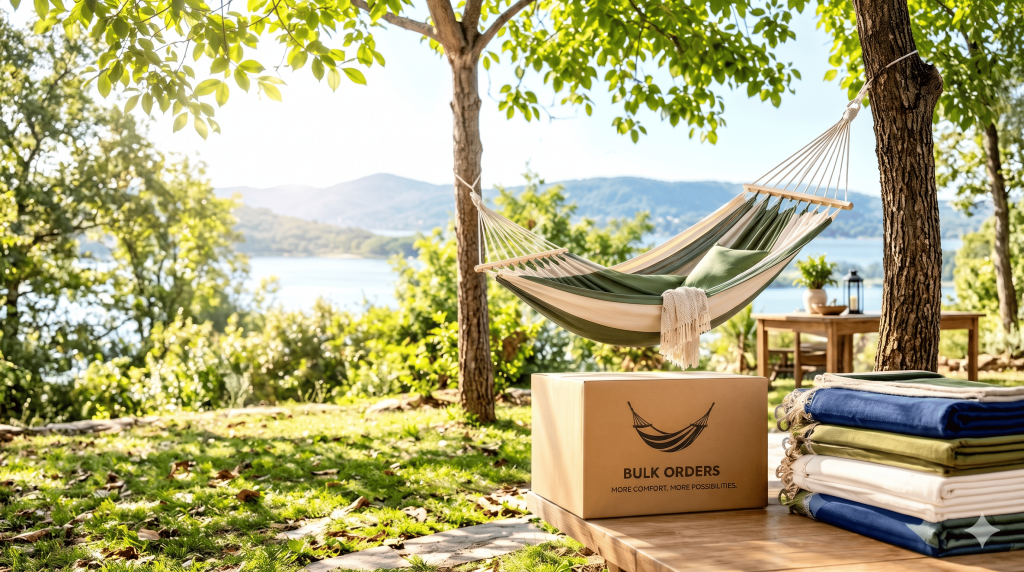
Custom Hammock Bulk Orders: What Buyers Need to Know
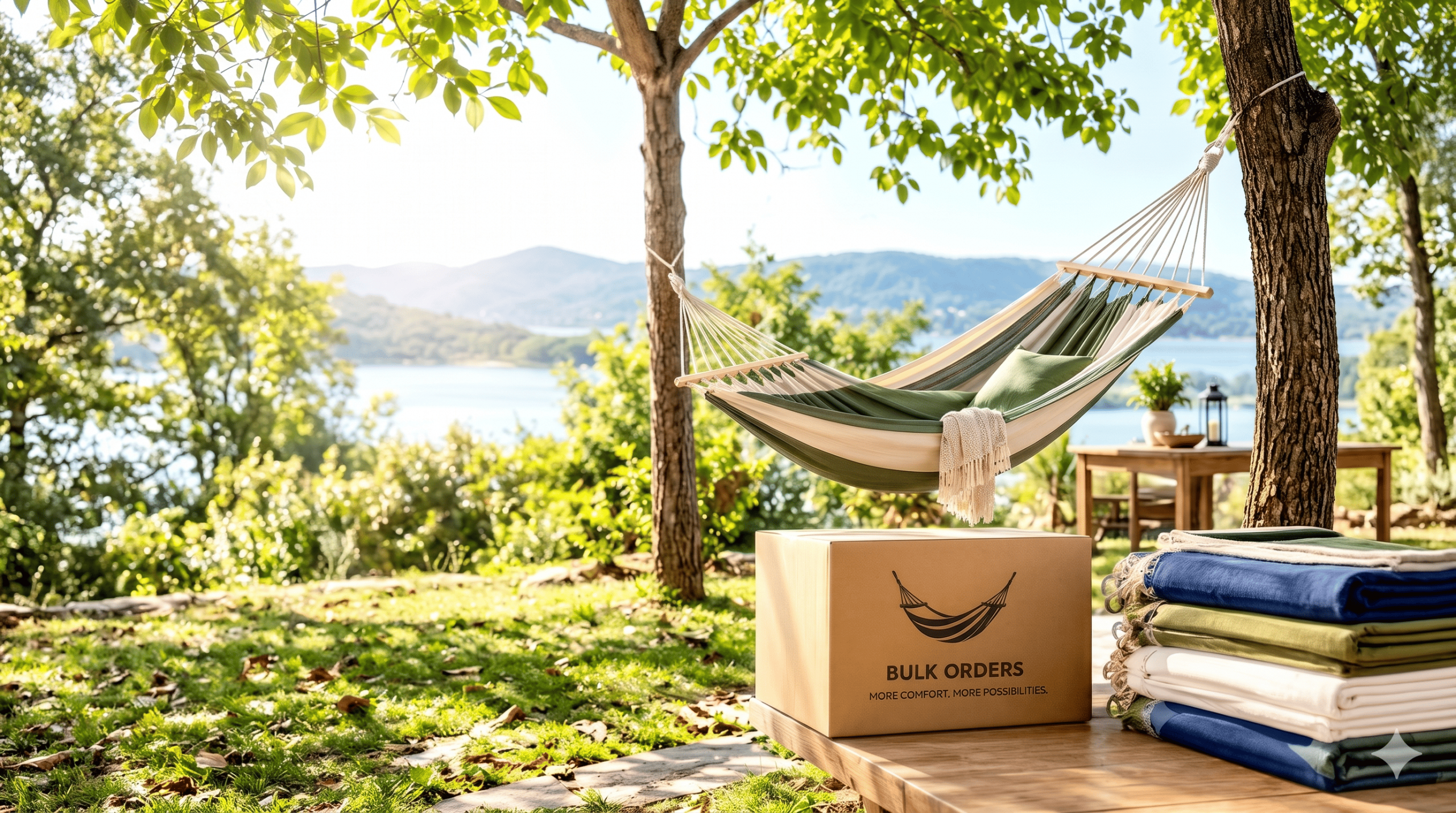
A custom hammock bulk order typically requires 100–500 units for basic customization and takes 6–10 weeks from first specification to shipment. Those numbers shift significantly based on how deeply you customize, what materials you choose, and who manufactures the product. Manufacturers like us at Nirvana Hammocks, which produce 5,500+ hammock units per day for major retail chains, operate on a different tier than promotional printers or wholesale platforms. Knowing that difference helps you choose the right partner and avoid costly mistakes on your first bulk order.
This article walks through every stage of the process: MOQs, pricing, customization costs, lead times, supplier selection, and a step-by-step checklist to get from spec to shipment without surprises.
MOQs vary by tier:
Basic logo customization starts around 100–500 units; fully custom OEM production typically requires 500–2,000+ units per design.
Per-unit pricing scales sharply:
Unit costs drop considerably as volume increases, budget conservatively at low quantities and revisit pricing at each tier as your order grows.
Customization layers add cost:
Custom colorways, branded packaging, and premium printing each add per-unit charges that compound quickly.
Lead times are longer than buyers expect:
Allow 6–10 weeks minimum from first spec to shipment, not including freight to destination.
Supplier type determines product quality:
Promotional printers and OEM factory-direct manufacturers serve fundamentally different needs.
Written approvals protect you:
Every stage, from sample sign-off to bulk PO, must be documented in writing before money or production moves forward.
Minimum order quantities for custom hammocks fall into clearly defined tiers based on how much customization you need. Stock hammocks with no changes can be sourced from as few as 1–20 units, but those are essentially retail purchases. For any real customization, the floor rises substantially.
Here is how the tiers break down in practice:
| Order type | Typical MOQ |
|---|---|
| Stock hammock, no customization | 1–20 units |
| Wholesale hammock with minor changes | 20–100 units |
| Logo, label, or packaging customization | 100–500 units |
| New print or semi-custom design | 300–1,000 units |
| Fully bespoke factory production | 500–2,000+ units |
The detail most buyers miss: MOQs are often set per SKU, per colorway, or per design, not just per total order. A buyer planning five SKUs at 100 units each has a 500-unit total order, but if the factory’s perdesign minimum is 300, every SKU falls short. Always ask whether the quoted MOQ applies to the total order or to each individual design.
Be cautious with suppliers offering MOQs under 50 units for custom work. That typically means you’re dealing with a promotional print shop applying a logo to a stock product, not a factory producing to your specifications. The trade-off is flexibility against product quality, material access, and unit pricing. For a one-time event giveaway, that may be fine. For a retail brand or hospitality sourcing program, it usually isn’t.
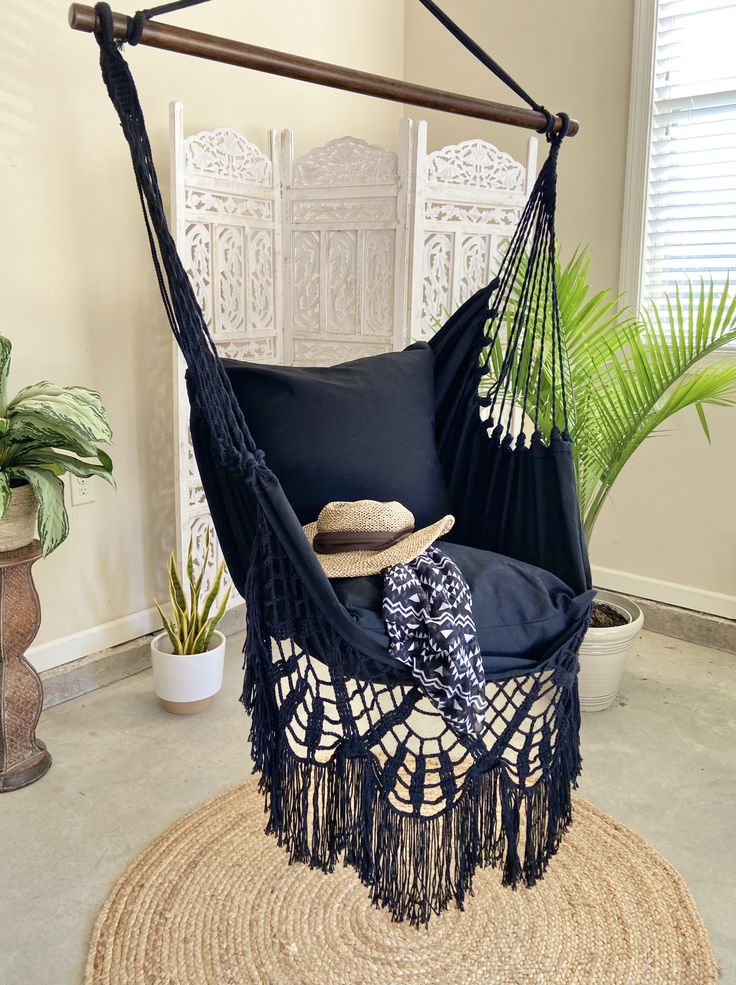
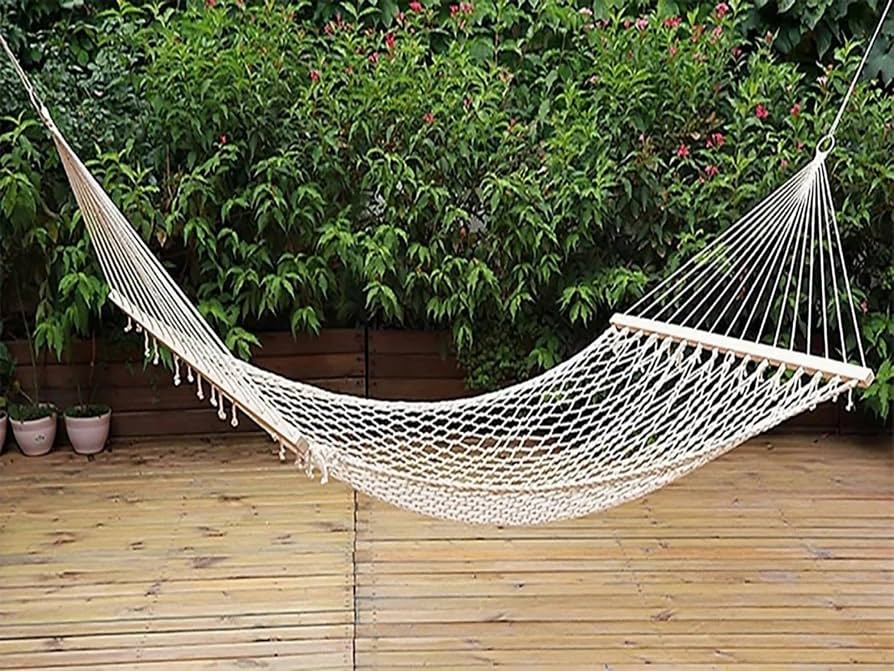

Pricing for branded hammocks in bulk spans a wide range, and where you land depends on quantity, materials, and how many customization layers you stack.
One-time setup or tooling fees are common additions and vary by supplier; freight is always quoted separately.
What drives unit cost up: fabric grade, suspension system quality, multi-color printing, custom packaging, and per-unit decoration charges. Each layer compounds. A custom colorway, a branded drawstring pouch, and an embroidered logo on a premium fabric hammock will land very differently in cost than a screenprinted logo on a stock model.
Always ask suppliers to provide a fully itemized quote so freight, packaging, and setup each appear asseparate line items.
Fabric type (cotton canvas, nylon, polyester, recycled blends, mesh), weight ratings, stitching, hardware, and suspension systems are almost always quoted case-by-case and bundled into the product quotation rather than published as a fixed line item. Premium fabrics, heavier weights, reinforced stitching, and custom hardware each push the unit price up incrementally.
Logo and color customization options include screen printing, heat transfer, dye sublimation, woven labels, embroidery, and PVC patches. Expect setup or artwork fees per design, plus per-unit decoration costs. Custom colorways add another layer: a non-standard mesh color, for example, can carry a meaningful per-unit premium in private-label programs, and custom colors may require MOQs of 30–1,000 units depending on the material.
Packaging is where costs quietly accumulate. Basic PE bags are often included in the base price. Branded drawstring pouches, color boxes, hangtags, and retail cartons are not. A full branded packaging configuration adds meaningfully to per-unit cost depending on structure and print complexity. When planning your per-unit budget, always ask suppliers to break packaging out as its own line item so you can see what “branded” actually costs.
The full timeline from initial specification to goods on a vessel runs roughly 6–10 weeks, and that’s before freight to your destination. Buyers who plan for a six-week turnaround on a fully custom order consistently run into delays. Build your purchasing calendar around the realistic schedule below.
The sample stage runs 7–21 days for a first physical sample. Simple OEM adaptations that build on an existing model sit at the shorter end of that range; new designs or nonstandard materials push toward three weeks or longer, sometimes requiring new tooling or custom fabric sourcing. Factor in 2–10 additional days per revision round, minor corrections land at the low end, while a fabric or construction change can require a full resample.
Bulk production begins after final sample approval, deposit, and material confirmation. That production run takes 20–45 days. Delayed feedback from the buyer directly delays the entire schedule. Every day you hold a sample without submitting written approval or a correction list is a day added to the back endof your delivery date.
The approval sequence has eight distinct steps: spec pack submission, digital mockup sign-off, sample payment, physical sample review, written approval or consolidated correction list, pre-production sample lock, purchase order deposit, and production start. Don’t shortcut this process verbally. Every approval and correction must be in writing, or you lose your ability to hold the manufacturer to the agreed spec.
The type of manufacturer you choose, not just the price, determines product quality, consistency, and the long-term viability of your brand. Promotional suppliers and OEM factory-direct manufacturers are fundamentally different operations.
A promotional supplier applies logos to existing stock products. MOQs are low, turnaround is fast, and the product is whatever the supplier already makes. That works for a one-time campaign or event giveaway where product differentiation doesn’t matter. For private label hammocks, retail-quality products, or hospitality sourcing at scale, a factory-direct OEM relationship is the only route that gives you control over materials, construction, compliance documentation, and consistent quality across repeat orders.
Production capacity and certifications signal a lot about a manufacturer’s actual capability. Nirvana Hammocks, for example, reports a production capacity of 5,500+ units per day, FSC-certified materials, and long-standing OEM relationships with major U.S. retailers, a different category than spreadsheetmanaged small-batch production. FSC certification carries practical value beyond sustainability marketing. It signals documented chain-of-custody, audited sourcing practices, and compliance documentation that protects buyers in regulated retail markets. Nirvana’s 70-year manufacturing heritage and established retailer partnerships reflect what sustained OEM capability looks like at scale.
Watch for these red flags before paying any deposit: vague MOQ terms, no written sample policy, missing factory documentation, and marketplace-only contact channels. Require a legal company name, business registration, factory capability proof, and an Incoterms-specified quotation before any money moves. A supplier who can’t provide those basics in writing is a supplier you shouldn’t pay.
Theory doesn’t get goods on a boat. Here is the exact sequence to follow from first contact to production sign-off.
Build your spec brief before contacting anyone. A manufacturer needs the following to quote accurately: hammock type, dimensions, fabric and weight rating, suspension system, logo files in vector format, colorways, packaging format, target quantity, destination country, and required delivery date. Buyers whosubmit a complete brief get faster, more accurate quotes. Buyers who contact suppliers with “we want custom hammocks” spend weeks in back-and-forth that a one-page spec brief eliminates.
When comparing quotes from multiple suppliers, ask every supplier the same questions: custom MOQ per SKU, sample cost and refund policy, tooling and setup fees, per-unit price at 100/250/500 units, production lead time, Incoterms, payment schedule, and defect replacement policy. Comparing responses against identical criteria exposes price-shopping traps and immediately reveals which suppliers actually read your brief versus sent a generic response.
For final confirmation steps: evaluate the physical sample against your spec point by point, then submit a single consolidated written correction list. Never give verbal corrections. Confirm pre-production sample approval in writing, sign the purchase order with inspection rights and delivery tolerances specified, and pay the deposit only after all approvals are documented. For a first order with a new supplier, a third-party pre-shipment inspection is worth the cost. It verifies quantity, quality, labeling, packaging, and carton integrity before the balance payment and container loading.
What is the typical hammock minimum order quantity?
It depends on the level of customization. Logo or label customization generally starts at 100–500 units. Fully custom OEM production, new designs, custom fabric, bespoke hardware, typically requires 500–2,000+ units per design. MOQs are often set per SKU or per colorway, so a multi-SKU order can exceed total volume expectations quickly.
Can I mix SKUs in a bulk order?
Some manufacturers allow it; others don’t. The key question is whether the factory’s MOQ applies to each SKU individually or to the combined order. Always confirm this in writing before submitting a purchase order. Mixed-SKU orders add complexity to production scheduling and quality checks, so not all bulk hammock manufacturers accommodate them at lower quantities.
How much does a hammock sample cost?
Sample costs vary by manufacturer and design complexity. Simple OEM adaptations tend to cost less than samples requiring new tooling or custom fabric sourcing. Ask about the supplier’s sample refund or credit policy upfront, some manufacturers apply the sample fee toward the bulk order once you proceed to production.
A successful bulk order depends on clear specifications, a realistic timeline, and the right manufacturing partner. Buyers who skip the spec brief, underestimate lead times, or choose a supplier based on price alone almost always encounter quality issues or missed deadlines on their first order.
For buyers who need scale, consistency, and full OEM customization capability, from fabric and hardware selection through branded packaging and certified sourcing, working directly with an established manufacturer is the only reliable route. Nirvana Hammocks produces custom hammocks for global retail partners at 5,500+ units per day, with FSC-certified materials and full private label support built into the program.
If you’re ready to place a custom hammock bulk order, get in touch with our team with your spec brief ready. The faster you can tell us what you need, the faster we can quote it accurately and get your order moving.
